March 4, 2026 - The Stepping Stone

The First Temptation

Transforming the landscape or allowing the landscape to transform us?

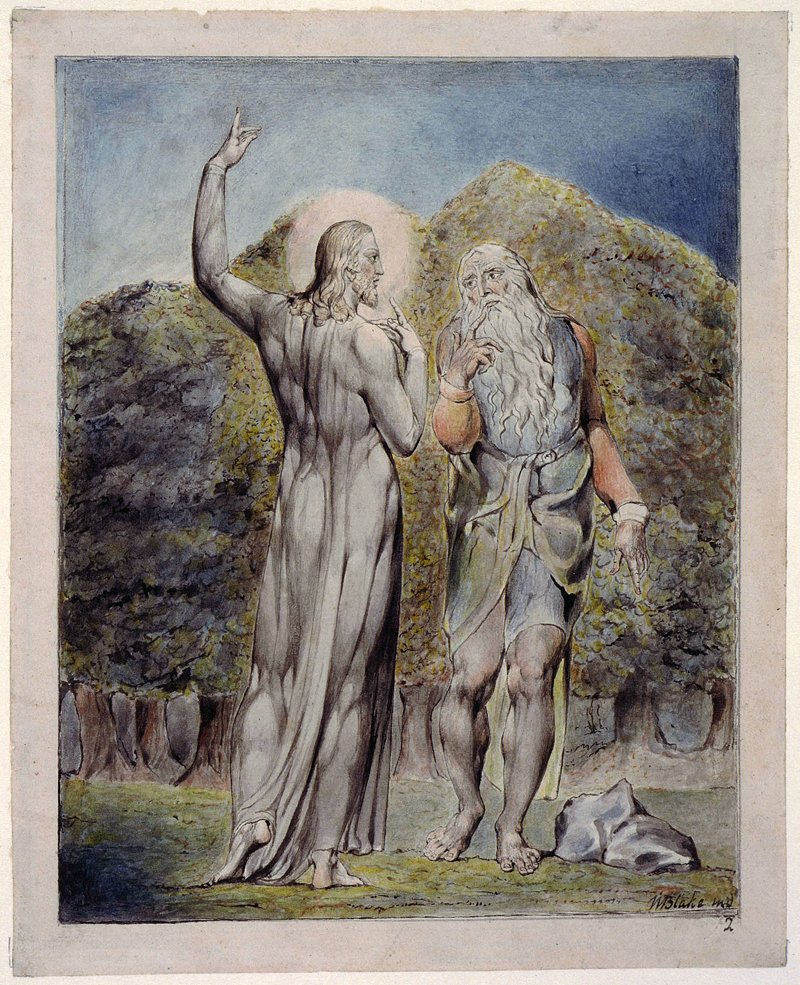
The First Temptation - "Command that these stones be made bread." by William Blake

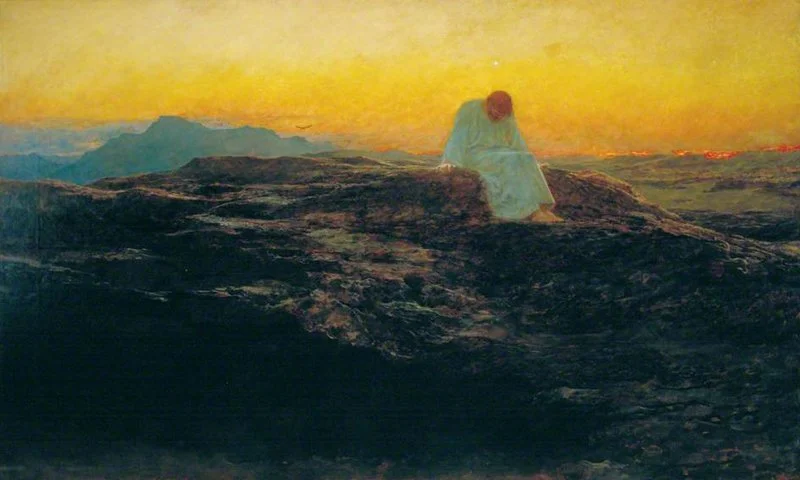
The wilderness serves as the landscape where the practices of fasting and discernment can occur - listening for the calling within and preparing to respond. Jesus is ushered into this place by the Holy Spirit as a guide and accompaniment. This wilderness is also something of an inversion to the second creation account when temptation arrives for the first time. One story begins with a landscape of abundance; the other with a barren terrain. And while the transformation of the world and remaking of Eden is an idea dwelling within the faithful imagination, Christ’s resistance of temptation to take control of the elements and transform it all shows us the way.

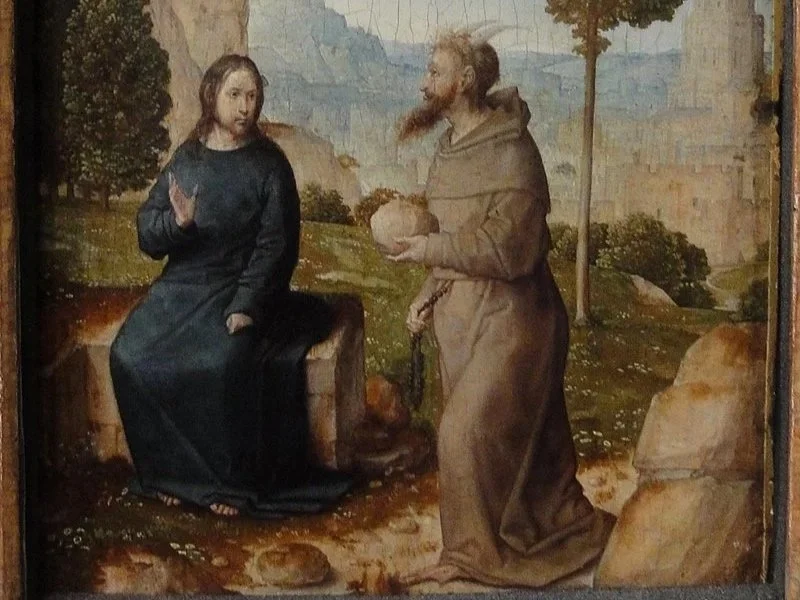
The use of the figures within the gospel helps us to see the image more clearly: the Spirit leads us into the wilderness to find our place within it - to allow the landscape to be and come to love it and revere it; the devil brings the landscape to us and tells us we can change it to meet our needs - creature comforts and all. There’s something wise and humble about Christ’s response to this temptation that invites us to approach our world that honors the place and belonging of all members (beginning with the stones). The stones are not a means to satisfy one’s hunger or a foundation for one’s kingdom, but a beloved part of the world that the Spirit guides us to come and see and love as they are. Opposite this way of love is the temptation and force of dominion that would view all the world as "up for the taking” to be used, exploited, and consumed for every human hunger imaginable - the temptation begins with stones and only grows from there.

This first temptation is about how we may inhabit the world when the world is less than perfect - if we can sustain some discomfort and restrain our power and will, and even come to honor and love that portion of the world that does not satisfy our personal hunger, or if we will cite the harsh landscape as reason enough to take, use, and transform the world to meet our needs without regard for anything or anyone else. The latter is a path that not only ensures scarcity but fosters a world shaped by power; the former has the ability to lead us toward a just and peaceful home, community, and world.

These temptations are about power and control. The wisdom of Christ seems to show us that regardless of the condition of the world - perfect or flawed - understanding how to use our power and understanding where our power must end is beneficial in not only keeping one faithful and true to God, but essential in working together with God’s children to co-create a community and world that is graced with abundance and worthy of us all.

So where do we begin in God’s calling to mend and heal the world? It would seem that we start with the practice of loving rocks. This love and the Spirit (if they are any different) will guide us from there.

Peace,

Rev. Chris McCreight

Transcript and Video of the Sermon, “Crunchy.”

This Sundays scripture: Matthew 4: 5 - 7


Save the Date: A Special Concert on April 11 @ 6pm

Sarah Park will be gathering with friends to offer a concert that will raise funds and collections for a local food bank.
February 25, 2026

Surveying the Landscape

The first week of Lent

As we prepare for our Lenten conversation on the temptations of White Christian Nationalism, it is necessary for us to begin with a reflection on how we may approach.

Whenever we discuss temptation, sin, and evil, it is so very easy to look outward and cast judgment. I can ignore the plank in my eye and chastise another for the splinter in his eye. I can even deceive myself entirely and proclaim that I am pure and good, and that all of the temptation, sin, and evil can be found over there (just point a finger at anyone other than me!). There are times when it is faithful and loving to call attention to the sin of another and to call power to repent, but it does seem that the right course and faithful action always begins with prayerful reflection about oneself.

We look inward with humility to listen and search for the ways that this temptation or judgment may already be at work within us. This whole conversation about White Christian Nationalism is a conversation about control and the power to keep it, and who among us does not appreciate and has not grasped for more control in this life? This interior work allows us to remember that we are all imperfect. It will lead us to become familiar with the challenge and difficulty of repentance and repair. Finally. if I am not able or willing to consider the ways that I have given in to temptation and sinned and harmed another; if I am not willing to repent, how am I at all to hope that another may change?

So we begin with humility and compassion. We will proceed with this pair, too. A look inward. Into our hearts and our homes.

The temptation comes to all of us.

We begin with humility and compassion.

One of the themes that runs through the temptations here is “control.” Control over the elements for satisfaction (stone to bread), control over the kingdoms for power and pleasure, and control over God for protection and immortality (and perhaps control over change if there is any merit in my humble suggestion that there is a fourth temptation of self-deception). In each of these, Christ is tempted with controlling the world to change it, bend it, and will it to satisfy his hungers and ego, instead of offering Christself in humility to accept, love, and serve.

White Christian Nationalism is a false gospel that would find its origins if Jesus were to come out from the wilderness having said “Yes” to every single temptation from the devil. Throughout Lent, we will engage how this false gospel is a temptation to Christ’s Church in America today - not that we may point to others and judge and condemn, but that we may understand the power of the temptation, discern what is faithful and good, and move with grace into this landscape. But we begin with a humble and prayerful reflection on the temptation to control that we have encountered and perhaps given ourselves over to. And with humility and compassion, we proceed.

Peace,

Rev. Chris McCreight

Transcript and Video of the Sermon, “Surveying the Landscape”

This Sunday’s scripture: Matthew 4: 1 - 4

If you would like to share your gifts of music in worship, you can sign up here

Pastoral Care and Conversation can be scheduled Monday through Thursday by calling the office, emailing Rev. Chris, or using the app here. Rev. Chris is glad to meet with you online, over the phone, at the office, a coffee shop, a bar, or at your home.


Community Events

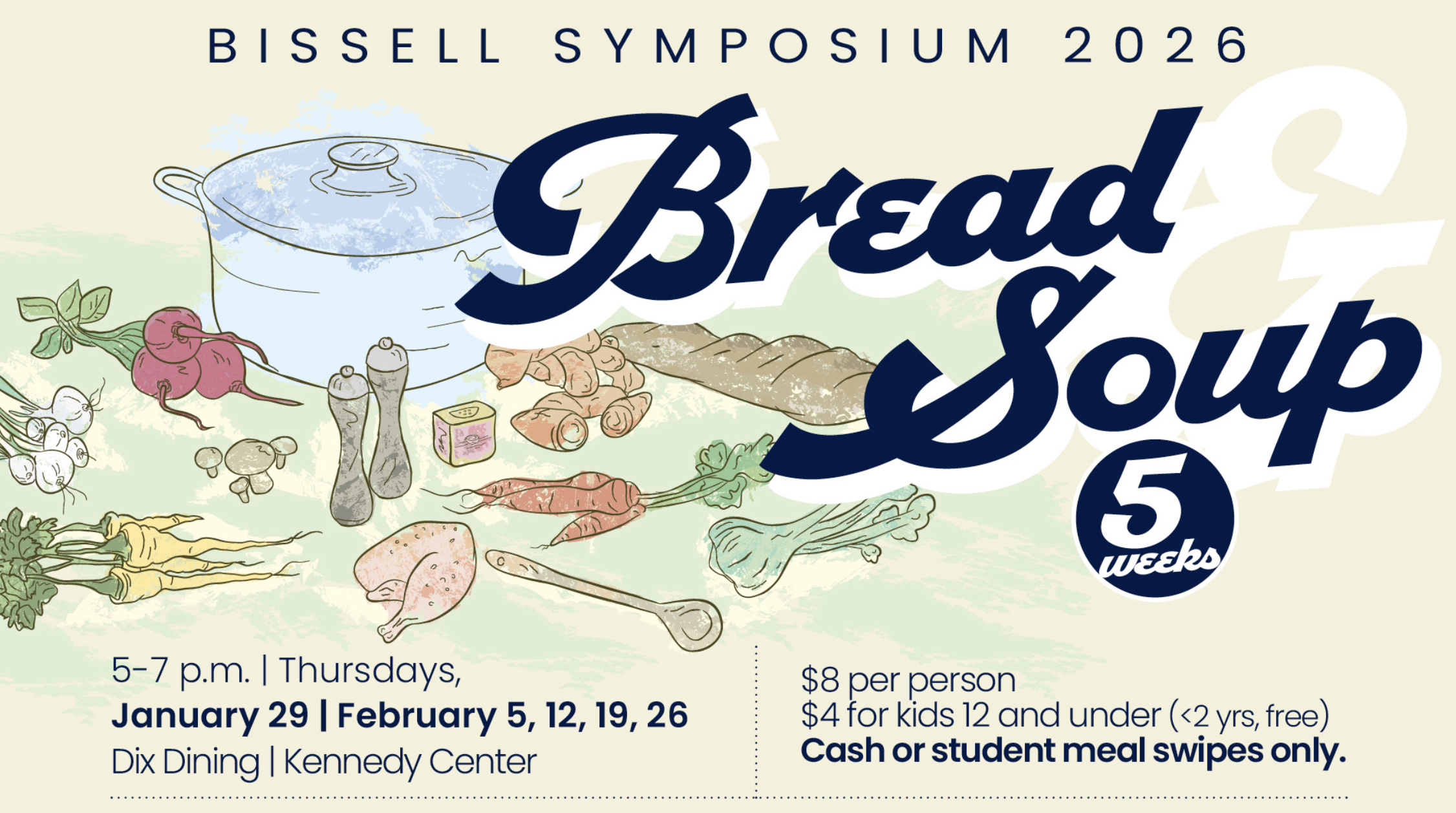
Bread and Soup returns to Hiram College as part of the Bissell Symposium, reviving a long-standing campus tradition that brings the community together around a simple, shared meal. The cost is $8 per person. Payment is accepted by cash or student meal swipes only.

Whether you’re continuing a tradition or experiencing it for the first time, Bread and Soup offers a welcoming space to gather, connect, and enjoy a piece of Hiram’s history.

A special Event

Following Bread and Soup, the college will host a screening of the documentary, “Join or Die”


What’s your story?

Friday @ 7pm in the Fellowship Hall

Whether it's the religious holidays of Lent or Ramadan, or the increasingly urgent call of "Spring Cleaning," this is a time filled with invitations to remove the obstacles and barriers between us and others that we may come together.

What is in need of reconciling? What does it look like to be reconciled? The joy, the hardship, the wisdom, the grace and the laughter of it all - it's all welcome.

Come join friends and neighbors from your village for an evening. Come prepared with a story to share (5-7 minutes) and/or come prepared to listen to the stories of others. This is just one of the ways that we cultivate community.

The church will provide some refreshments and hot beverages. You are more than welcome to BYOB.


Maple tapping - days & times dependent on weather (see below)

If you would like to join, or have questions, please contact Rev. Chris

From Zack Fox:

I wanted to provide details about the project if you are hoping to help with tapping or collections.

  • For tapping, we will need people to bring rubber mallets and cordless drills with a clean, sharp 5/16" drill bit, if possible.

  • Days and times for collections are dependent on weather and schedule availabilities, so decisions will usually be made the previous day. The work involves carrying buckets of sap through the woods, usually with muddy conditions, so please come dressed appropriately.

  • If you plan to join us, the sugarbush is on Norton Rd, north of Hiram. You can park on the north side of the road, in between the entrance and the Masters house.

  • The link below is a map that shows the parking location, as well as the trails we follow for collections. You can keep it on your phone to help with finding the trails while you're in the woods.

  • Don't hesitate to reach out with any questions or concerns you have. We're looking forward to another great season!

https://www.google.com/maps/d/edit?mid=1g2TKJX7vP5dBF5XxB7ELOHipnN7DIHc&usp=sharing

Zack Fox ’21 (he/him)

Sustainability Coordinator, Hiram College

Land Stewardship Manager, Hiram College Field Stations


Hiram College Events - open to the public

Reading and discussion with author Jonathan Gleason

Wednesday, February 25, 5pm, Kennedy Center Ballroom

Jonathan Gleason is the author of Field Guide to Falling Ill, a collection of essays exploring the human lives behind the corporate, legal, and cultural practices that shape medicine. Meghan O’Rourke selected the “layered, reflective, and unusually poised debut” as the inaugural winner of the Yale Nonfiction Book Prize. A 2023 Elizabeth George Grant Recipient and 2024 Granum Foundation finalist, Gleason’s work has also appeared in the Best American Essays (2024), The Sun Magazine, New England Review, and Kenyon Review. He teaches creative writing at the University of Chicago.

Hiram College's Events Calendar has full listings of campus events, many of which are open to the public.