
Beyond the Gesture
An invitation to new life.
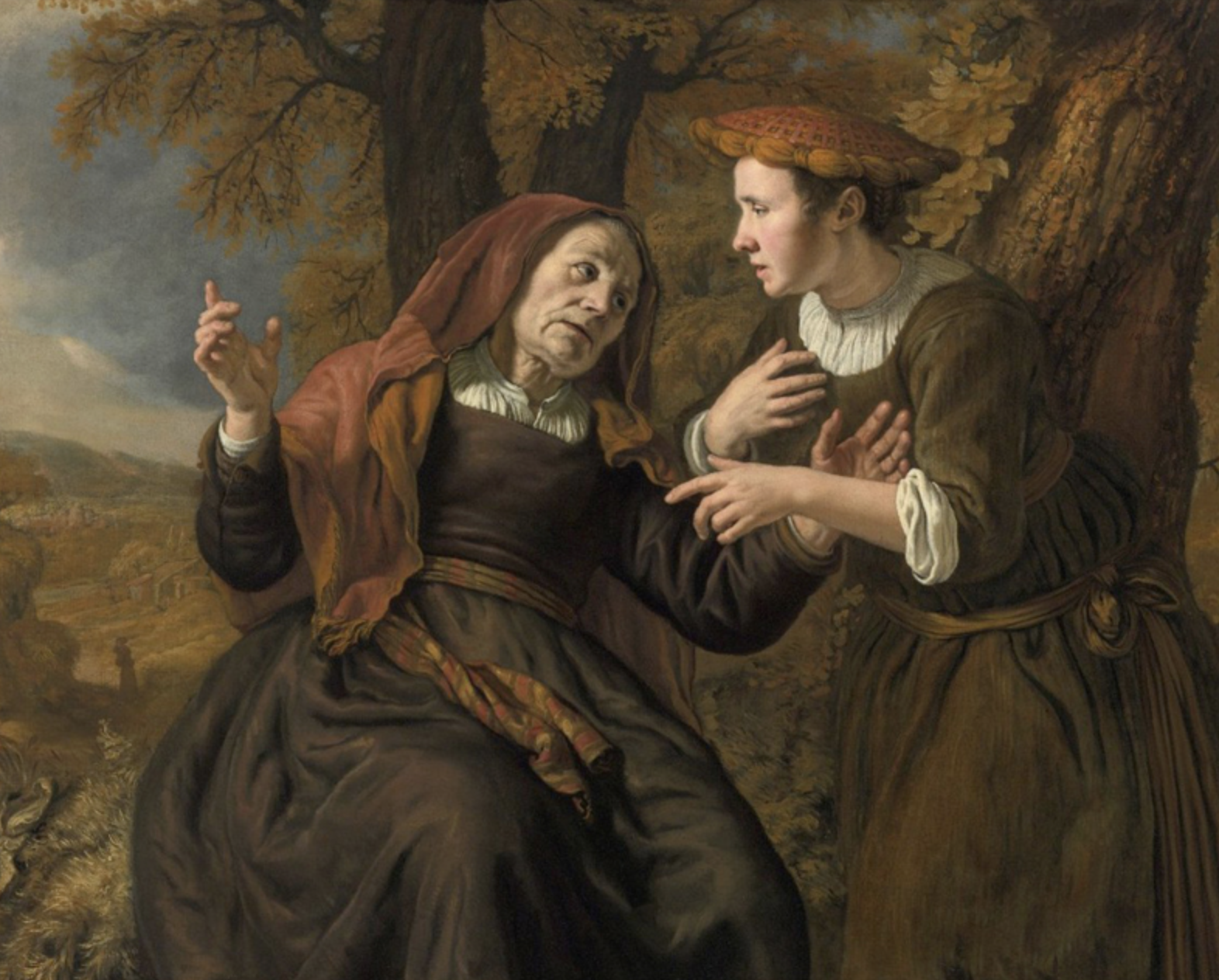
The book of Ruth is a story about a nation enduring famine, told through the lens of one particular family: Elimelech, Naomi, and their two sons, Machlon and Kilyon. As it is with every life and story, so too the book of Ruth is lined with a wealth of complex details, each conveying some additional treasure within the story:
Geography:
Rabbi Chaim Jachter notes that Moab has a similar climate to Israel. So when the famine came to Israel, it also came to Moab. While we would understand and even expect for a family to migrate and seek refuge in another territory of abundance, this was not the case. In fact, Moab was a land and people with a historic animosity towards the Israelites - no Moabite ever offered hospitality to the Israelites when they passed through. It was so noted and remembered that it became forbidden to marry a Moabite (Deuteronomy 23.4). Elimelech, being an aristocrat with wealth and status did not seek refuge in Moab, but abandoned his hungry kinsmen and neighbors to seek “safety and security” in a land and among a people who would not ask anything of him.
Naming as Potential:
Rabbi Jachter also points out that the names of the sons, Machlon and Kilyon are filled with symbolism. Machlon may be derived from the word “machala,” which means “sickness” or it may derive from the word, “mechol,” which means “joyful dance.” Similarly, Kilyon has a dualistic derivative possibly shaped by the word, “kalah,” which means “destruction” or “va’yechal,” which means “completion.” Jachter calls our attention to the rich potential within their sons to choose and live in a way that leads one way or another. The commentary then suggests that they chose like their father, Elimelech.
More to be Said:
Rashi understands the vows of commitment made from Ruth to Naomi as a rebuttal to Naomi’s every reason why Ruth should stay in her land with her family.
For wherever you go, I shall go. From here our Rabbis of blessed memory derived that if a [prospective] proselyte comes to convert, we inform him of some of the punishments [for violating the commandments] so that is he decides to renege [from his intention to convert], he can renege; for out of the words of Rus, you can learn what Naomi said to her. [Naomi said.] “We may not venture outside the boundary [of 2000 cubits beyond city limits] on Shabbos.” She [Rus] replied to her, “For wherever you go I shall go.” [Naomi then said,] “We are prohibited to allow a woman to be secluded with a man who is not her husband.” She [Rus] replied, “Where you lodge, I will lodge.” [Naomi said,] “Our nation is separated from other nations by 613 commandments,” [and Rus replied,] “Your people are my people.” [Naomi said,] “Idolatry is forbidden to us,” [to which Rus replied,] “Your God is my God.” [Naomi then said,] “Four [types of] death penalties were delegated to Beis Din [to punish transgressors],” [and Rus replied,] “Where you die, I will die.” [Naomi continued,] “Two burial plots were delegated to Beis Din [to bury those executed], one for those stoned and those burned, and one for those decapitated and those strangled.” She [Rus] replied, “And there I shall be buried.”
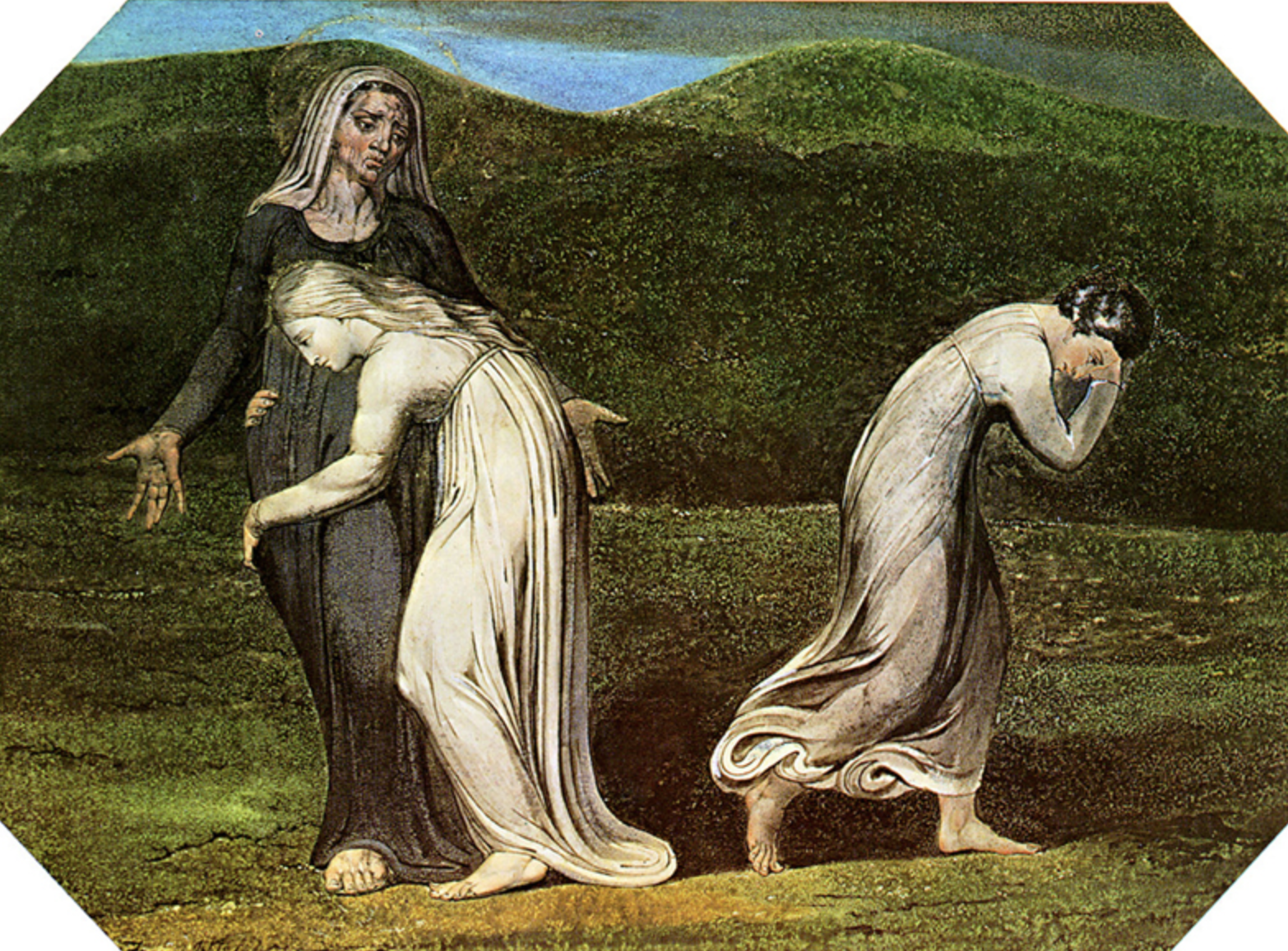
What shines through within this first chapter is a firm insistence of the author that within every landscape and at every juncture of life, we have some measure of choice and agency - even if it may be small. Elimelech could have stayed and shared his wealth with his kin and neighbors, but chose to flee and hoard it all. The sons could have returned to Israel or practiced generosity in Moab, but they chose to try and keep it all too tightly, and lost it all. Orpah and Ruth could have each returned to their family to try and start over. One did and the other did not. We have a choice.
We have choice: to flee or to stay; to share or to keep. We have a choice: to live up to our name and calling, or to succumb to something much less. We have a choice: to return to the familiar or to begin anew.
Our tradition holds a defiant fist in the air at any idea of fate (resurrection anyone?) - we have a choice in the matter. And not only do we have a choice, the story of Ruth shows us just how much consequence our choices can hold.
And so we pray not to be perfect in everything as though salvation is acquired through the perfect life. But we pray to have a clarity of vision and a courage of the soul to sense and understand the choices before us, and the invitations to a richer life that may come from being faithful to God, ourselves, and one another.
Peace,
Rev. Chris McCreight
Manuscript and Video to the sermon, “The Way Back Home”
In Our Church and Community:
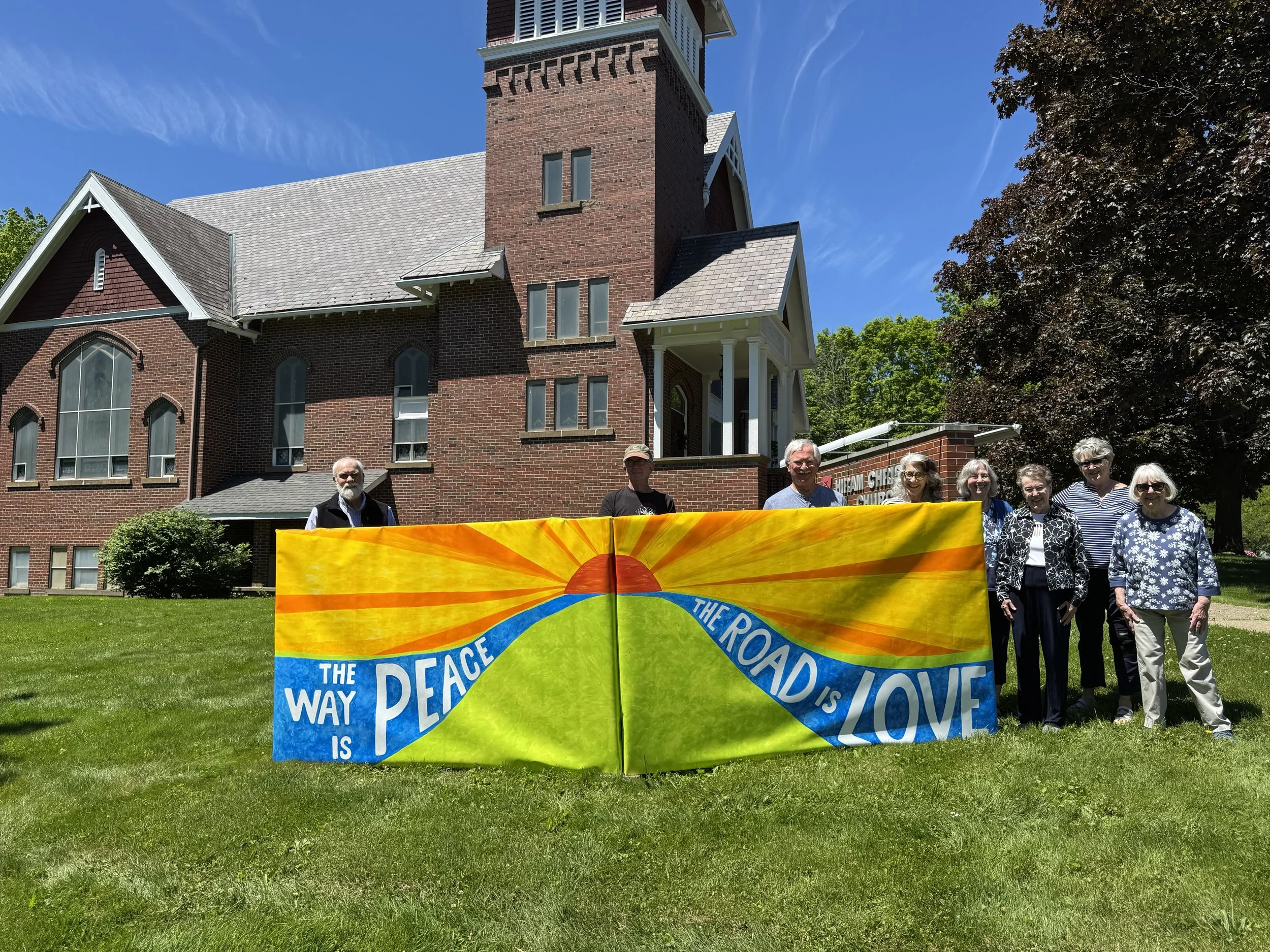
A new installation as part of the Common Good: Inspired by Marcia Muster and created by Isabel Kopp

We’re celebrating the 2nd Anniversary of becoming an Open and Affirming congregation within the Christian Church (Disciples of Christ). May we continue to live into this commitment for all of God’s beloved children.
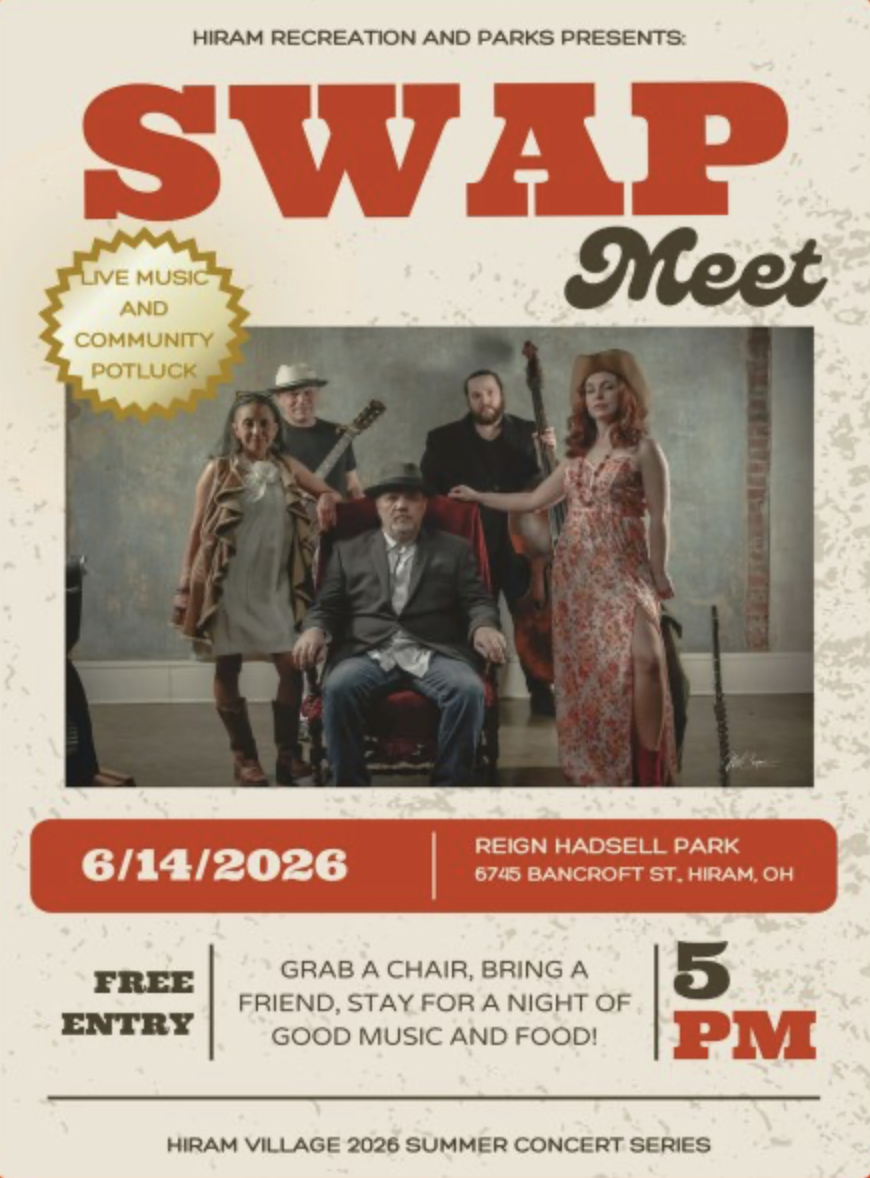
The first concert of Hiram’s series at Reigh Hadsell Park (aka “the Zip-line Park with the Gazebo”)