The last verse of this wilderness and temptation epic is beautiful (Matthew 4.11).
“Then…”
after the offers of stone, temple, and kingdoms of the earth; after Christ refused every temptation to exercise power over creation, God, and humanity; after the ego was tempered and the soul resolved…

Then the devil left him,
and suddenly angels came and waited on him.
Who shows up when temptation is resisted.
The gospel authors convey the wisdom and grace of the tradition to guide us as we make our way within the world. Here is a clear refutation of assuming any power over another that is not granted through genuine consent and a firm denial that God would ever sanction a utilitarianism to bring about a certain end (God is never one to affirm that an end can justify a means; God is all means). This is the character of Jesus - how Christ moves “when no one else is watching” - and the ethos of the ways of love we will see as Christ moves in the world and moves towards the center of all things on Palm Sunday: power in service to; power in kinship with.
Humility, service, solidarity, cooperation, and community. This is the shape of power that Christ embodies and invites us into. This is the shape of power that keeps the size of the ego in check and trusts in the abundance of the cosmos. This is the shape of power that makes room for the angels to come.
This last Sunday, we engaged this verse of scripture in light of our broader conversation on White Christian Nationalism. The first weeks were about how to understand this false gospel - as a temptation that promises fulfillment, but is ultimately unsatisfying. Sunday then, was about how we may approach others who have given in to this temptation - recalling the wisdom of Saint Augustine that “sin is the disorder of love” and the revelation of scripture that temptation touches on real and legitimate hungers.
Every one of the temptations that comes to Christ addresses a legitimate hunger. To be sure, what the devil offers is a false promise, but an attempt to address a real and legitimate hunger. It is the same with White Christian Nationalism. WCN presents itself as a promise to the hungers of purpose and belonging, protection and authority, agency and control. But like every other temptation, White Christian Nationalism cannot fulfill on any of these hungers; it is ultimately unsatisfying. The hunger remains.
Most of the clergy that preach WCN are aware of its inability to satisfy the hunger. They are aware of the hunger-pangs in their congregations and put forth a tremendous amount of effort to dismiss them in attempt to keep control. WCN clergy proclaim certainty and discourage doubt and questions. They stress orthodoxy and warn against “false teachers” who will cause the faithful to stray. This ethos makes everyone outside of the congregation or denomination immediately suspicious and not to be trusted. Clergy and influencers of this strain are even moving to demonize empathy, which is a way of quieting and numbing the language of the soul. The whole false gospel is enforced through a strict shame/honor system. Honor and membership come through admitting certainty - denying every question and trying to quiet the hunger-pangs of the soul that can never be silenced. WCN isn’t satisfying. The hunger still exists. And everyone knows it.
In such a context, the wisdom and grace of Christ may prove edifying.
If you have a neighbor, friend, or family member who is becoming more taken by WCN and becoming more distant and secluded, and if you feel a genuine sense of care and commitment, then perhaps instead of trying to debate scripture or tradition and instead of pointing out any inconsistency, perhaps there may be an opening in simply asking about their hunger.
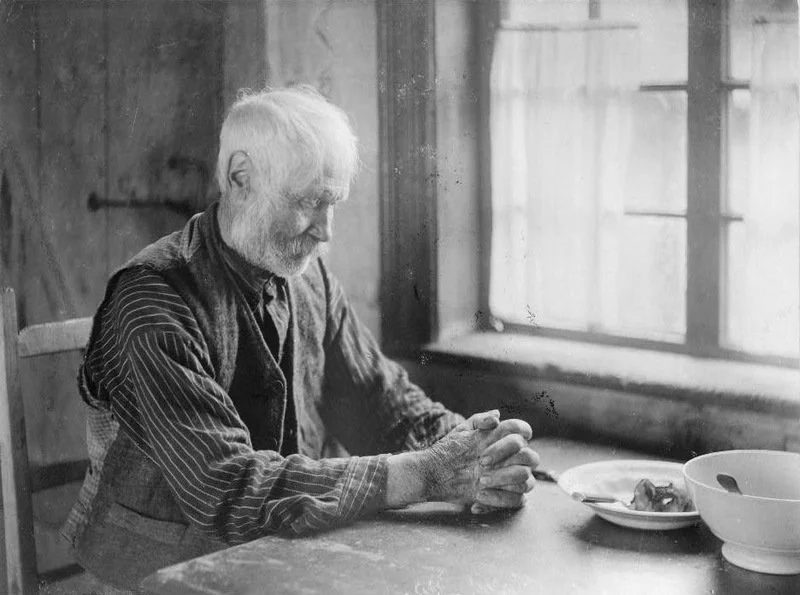
Listen to the hunger.
Trust in the wisdom of the soul.
Ask about what hunger is being met by their congregation and their teaching.
And then listen for the hunger. Listen to the hunger.
Perhaps there is no need to mention anything about the error of WCN or these temptations, for simply in asking about the hunger, you will have provided an opening for the soul to name its longing. The authorities and gospel of WCN will do near anything to silence and atrophy the souls of its members. But the soul always knows what’s true. At times of neglect and suppression, the soul benefits from an invitation to speak. If we can resist the temptations to exercise power over (whether that is to prove our own religious authority or to take control of their life and fix it now), we may find an opening.
Perhaps we stay and continue in conversation. Perhaps we share of the bread we have received. Perhaps we leave and allow reflection to guide. Either way, we might just find angels among us.
This is the purpose of our Lenten theme this year: to better understand White Christian Nationalism that we may discern a more genuine Christianity free from the temptations and entanglements of racism, patriarchy, sexism, and nationalism - and that we may serve our neighbors, friends, and community better.
Christ shows us the way: Power in service to. Power in kinship with. May it bless us and lead us well within every wilderness and out from.
Peace,
Rev. Chris McCreight
Transcript of the Sermon, “Listen for the Hunger”
“This is not
the age of information.
This is not
the age of information.
Forget the news,
and the radio,
and the blurred screen.
This is the time of loaves
and fishes.
People are hungry,
and one good word is bread
for a thousand.
”
Listen for the hunger. Shout in protest of the pain. These are not in conflict.
After offering a sincere invitation to “listen for the hunger” of folks who have given in to the temptations of White Christian Nationalism on Sunday morning, I walked downstairs to join the Common Good’s event gathering the community together to talk about national and state issues, and prepare signs and spirits for the No Kings protest this Saturday. I noted the optics of the movement and even discussed the possible irony with others.
Do these conflict? Can these actions co-exist?
Reading through the gospels, it seems that Jesus embodies different approaches to different people. In particular, it seems that Jesus approaches the masses in humility and compassion (although there are instances when he seems bothered by the crowds and bothered by outsiders). But when it comes to engaging with people in positions of authority - religious or political - Christ has an expectation of greater responsibility and justice, and there is truth-telling and turning of tables.
Protesting those in power. Truth-telling to those in power. This can be done in love. It may be that the most loving act one could offer to a person in power who is committing injustice and atrocity - especially atrocities in the name of God and Jesus - would be to yell, scream, and turn over tables to disrupt the conviction and arrogance of one with the authority to cease. Like a child playing with a hot stove, it may be that the necessary and loving action is to shout and yell to capture their attention, to stop the harm, and then to come close and wrap our arms around them.
Caring conversations and boisterous protest can both be loving actions - both can lead back to the soul, God, and each other. We can learn from Christ how to embody this love best with the person next to us.